How to share an AI subscription with your team, and what each option costs (2026)
Why one ChatGPT Plus or Claude Pro login can't be shared, and what a team of five pays instead: ChatGPT Business, Claude Team, Google Workspace, Poe, Magai, Mammouth, Krater and Endless.

You can't share one ChatGPT Plus or Claude Pro login with your team: both companies' terms say an account is for one person. A team has three legitimate options. Each person gets their own plan, the team buys a business plan from one company (ChatGPT Business, Claude Team or Google Workspace with Gemini), or the team uses a multi-model app that bills once for everyone. For five people, the options here cost from $4.99 a month for one shared Poe subscription to $250 for ChatGPT Business plus Claude Team. The cheapest ones share a fixed pool of points or credits instead of giving each person their own allowance.
This guide shows what each option costs for a team of five, what the team shares, and how much control an admin has over each person's spending. We make Endless, so read our section with that in mind; we have tried to be as specific about its limits as about everyone else's.
Who this is for
Small teams, agencies and studios where several people use AI every day and someone has to pay for it. If you only want to compare multi-model chat apps for one person, our guide to apps with every AI chat model in one subscription covers that, including T3 Chat, Writingmate, TypingMind and OpenRouter.
How we checked
We read each company's terms, help center and pricing pages on 26 November 2026. Prices are US list prices before tax. Where a page didn't state something, such as a seat minimum, the table says "not stated". Credits and points are not comparable between companies: each one sets its own price per message, image or video.
Why one shared login breaks the terms
OpenAI's Terms of Use, effective 1 January 2026, say: "You may not share your account credentials or make your account available to anyone else." Its account sharing policy adds: "If someone else needs to use OpenAI's products, they should sign up for their own account."
Anthropic's Consumer Terms, effective 8 October 2025, say: "You may not share your Account login information, Anthropic API key, or Account credentials with anyone else. You also may not make your Account available to anyone else."
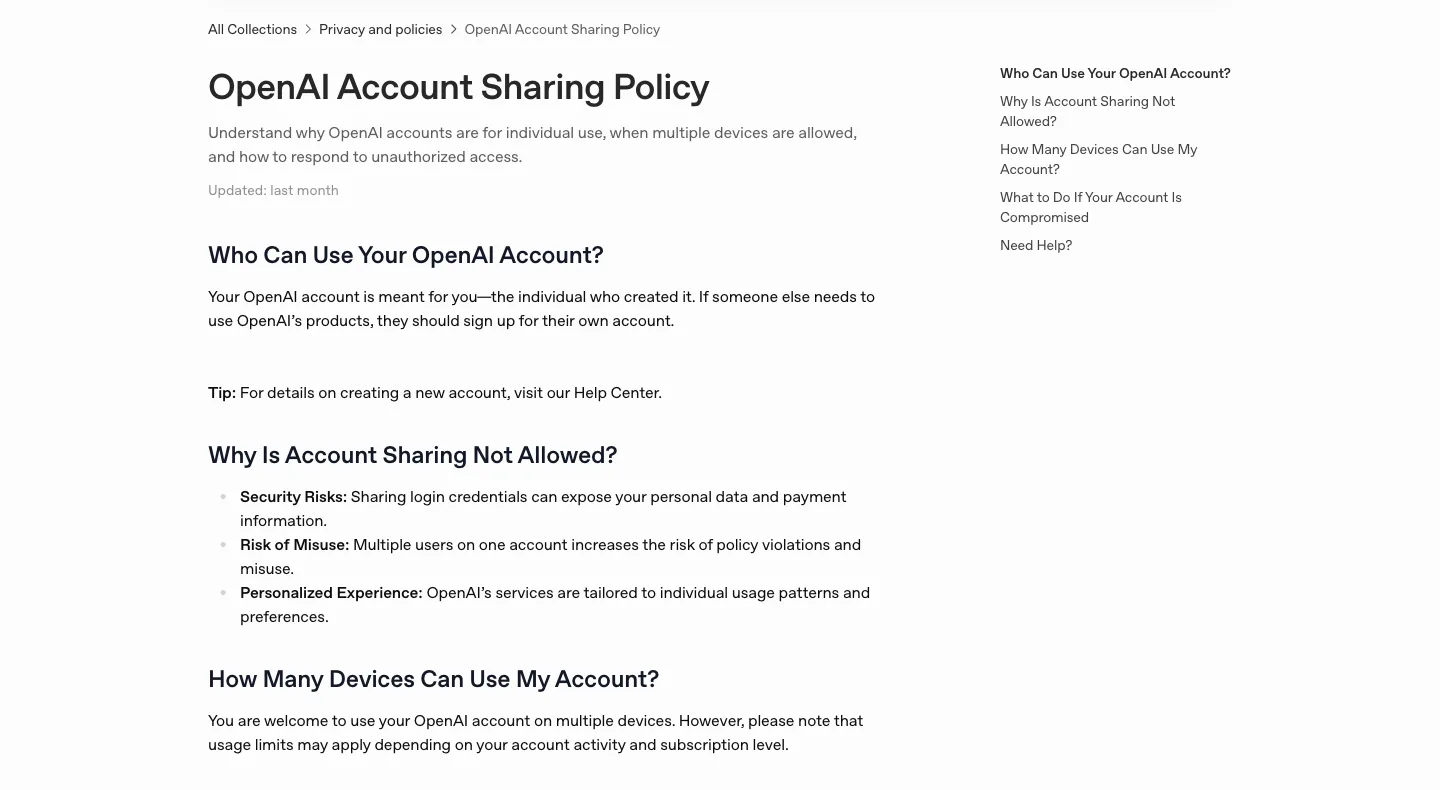
Both companies reserve the right to suspend or close an account that breaks their terms, and Anthropic's terms say it can do so without notice. A shared login also has practical problems: everyone sees everyone's chats and memory, one person's heavy use eats the usage limit for all of them, and when someone leaves, the only way to remove them is to change the password.
The cheap "shared accounts" sold on marketplaces are the same practice resold, with the same risk of losing the account.
The options at a glance
From each company's own pages, for five people, billed monthly unless stated.
| Option | Models | Five people, a month | Seats | Images and video | Limit per person |
|---|---|---|---|---|---|
| Five personal plans | One company's | $100 (5 × ChatGPT Plus or Claude Pro) | One per plan | Depends on the plan | Each plan's own limit |
| ChatGPT Business | OpenAI | $125, or $100 billed yearly | 2 to 200 | Image generation; video not listed | Usage per seat; spend controls |
| Claude Team | Anthropic | $125, or $100 billed yearly | 2 to 150 | Not listed | Usage per seat; spending caps where available |
| Google Workspace Business Standard | $70, with a yearly commitment | 1 to 300 | Google Vids; generation is an add-on | Usage per seat | |
| Poe | GPT, Claude, Gemini, more | One subscription, from $4.99 | Subscriber invites members | Image and video bots | None: all members share the points |
| Magai Standard | GPT, Claude, Gemini, more | $100 ($20 per seat) | Above 10 seats, through sales | Yes | Optional usage limit per invite |
| Mammouth Starter | GPT, Claude, Gemini, more | $60 before VAT ($12 per user) | Not stated | Yes | A plan level per person |
| Krater Max | 500+ models | $119 for 10,000 shared credits | No seat limit | Yes | Not stated; spend caps on Enterprise |
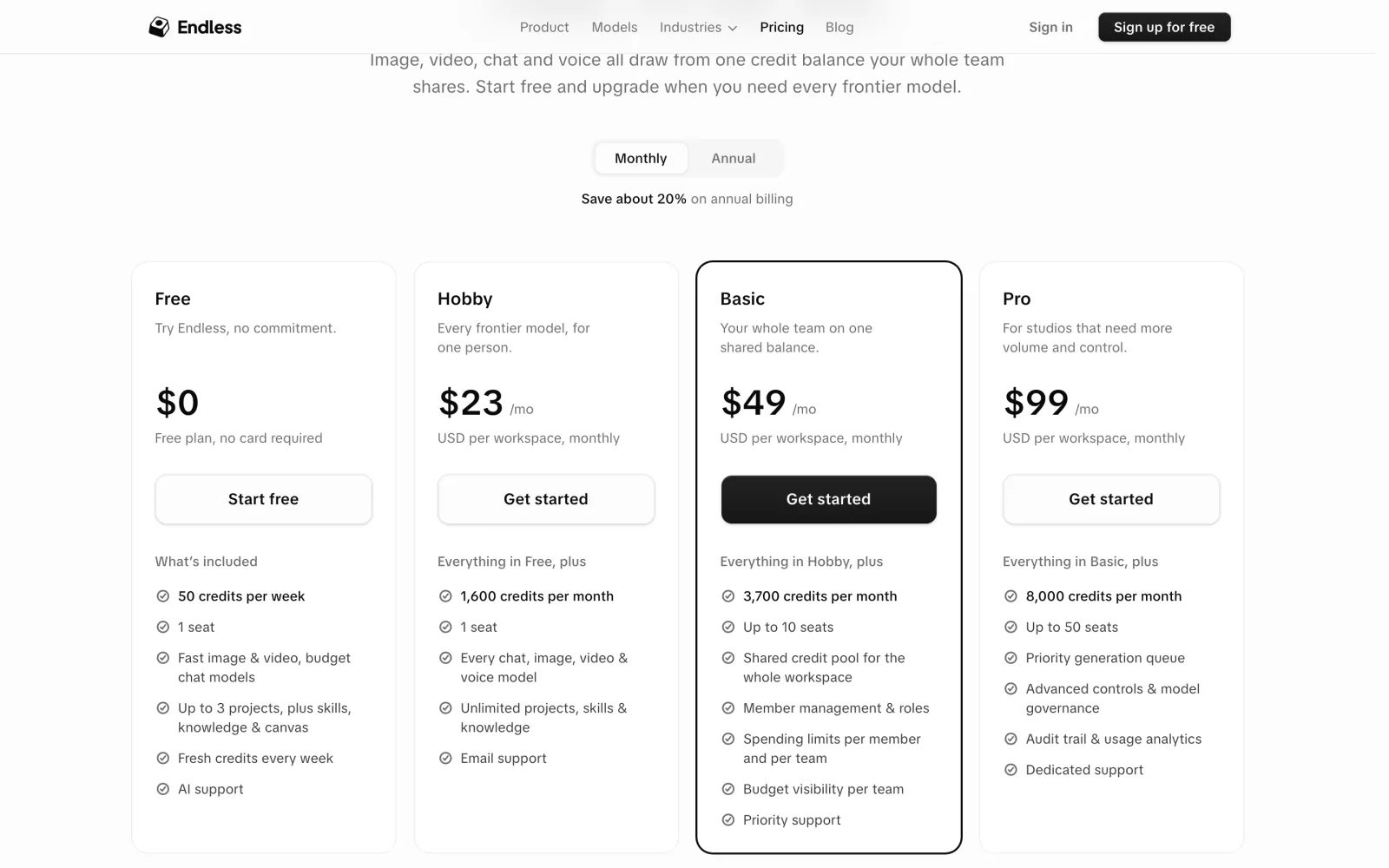
| Endless Basic | 21 chat models from 10 makers | $49 for 3,700 shared credits | Up to 10 (Pro: 50) | 19 image and 21 video models | Per person and per team |
Option 1: one personal plan each
The simplest legitimate route. ChatGPT Plus and Claude Pro cost $20 a month each, so five people pay $100 for one company's models, and $200 if everyone wants both. Nobody shares anything: no shared projects, no central bill, and no admin who can see usage. Our ChatGPT pricing and Claude pricing guides list every personal plan.
For a household, Google is the exception. Google AI Pro is $19.99 a month on its plans page, and Google One lets you share it with up to five other people in your Google family group. Family members get selected AI benefits, not every feature. It's built for personal accounts in a family, not for a company.
Option 2: ChatGPT Business
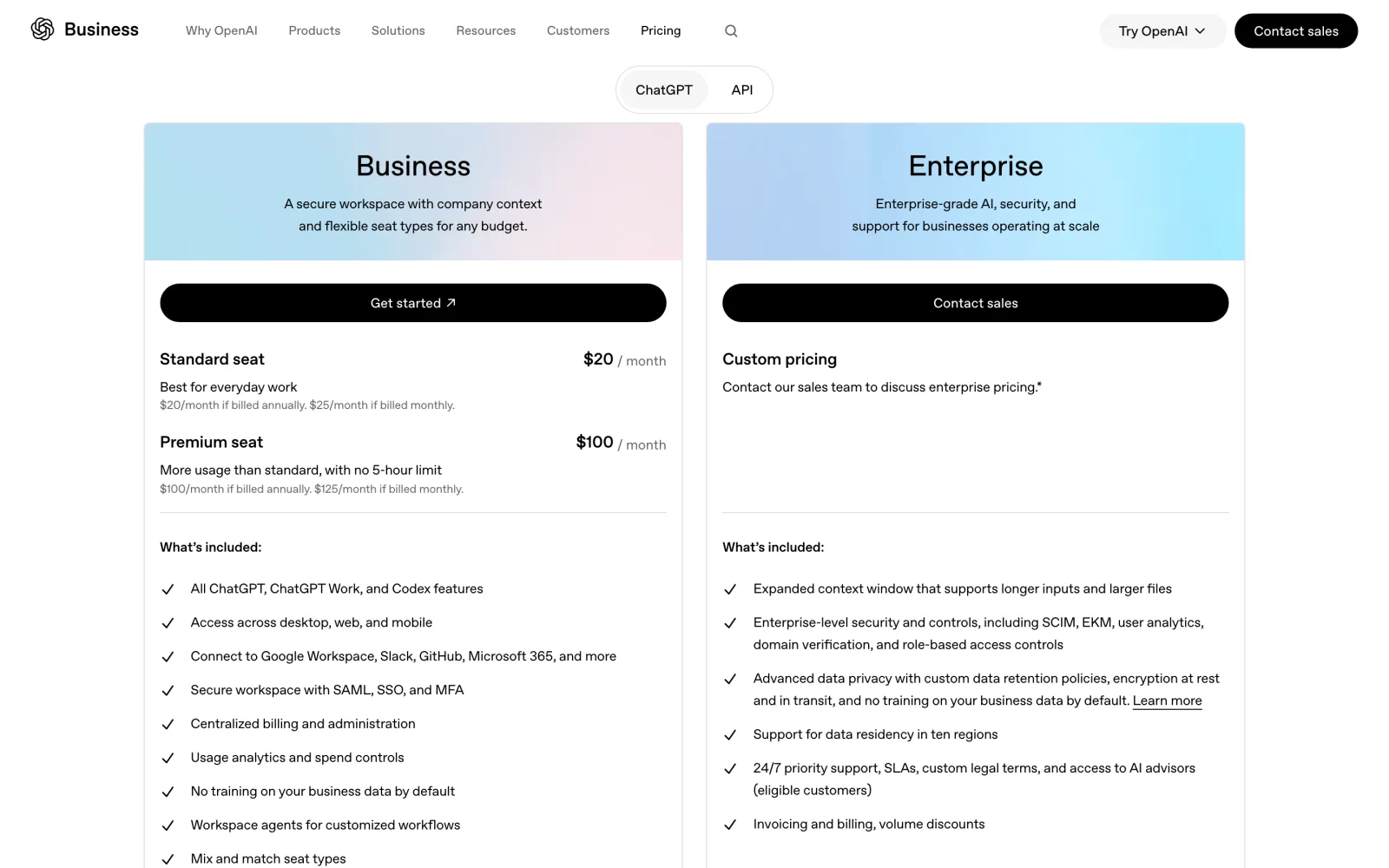
What it costs. A Standard seat is $25 a month, or $20 billed yearly, and a Premium seat, with more usage and no 5-hour limit, is $125, or $100 billed yearly. Plans start at 2 users and go up to 200, and you can mix seat types. Five Standard seats cost $125 a month. Source: the Business pricing page.
What the team shares. A dedicated workspace with shared projects, central billing and administration, connectors to Google Workspace, Slack, GitHub and Microsoft 365, and SAML single sign-on. OpenAI says it doesn't train on business data by default.
Spending controls. The plan lists usage analytics and spend controls, and Business can buy credits for more usage. Usage limits are per seat, so a light user's unused allowance doesn't go to a heavy one.
Where it falls short. Only OpenAI's models. If part of the team prefers Claude, you pay for a second plan.
Option 3: Claude Team
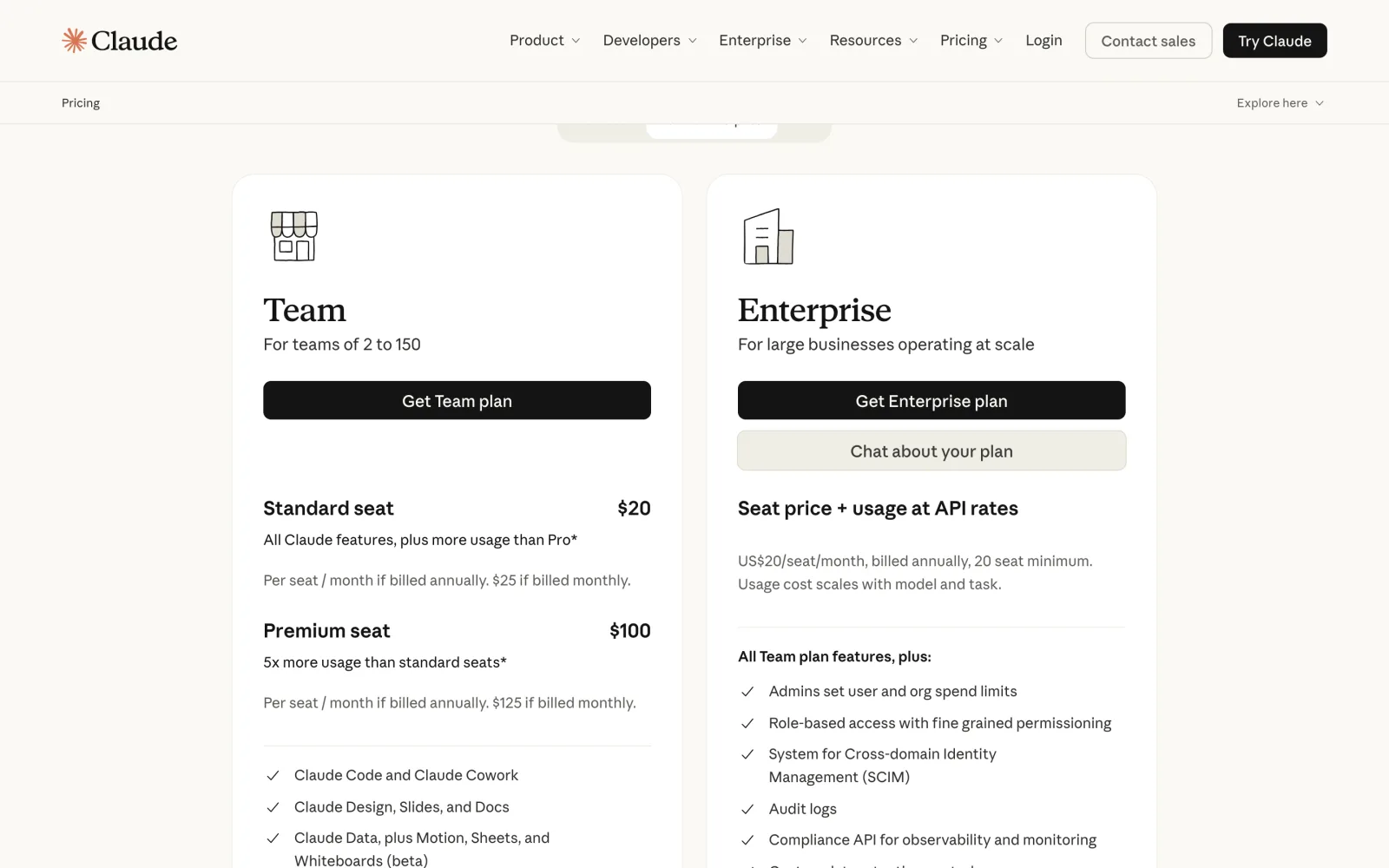
What it costs. A Standard seat is $25 a month, or $20 billed yearly; a Premium seat, with 5x the usage of a Standard seat, is $125, or $100 billed yearly. Team needs at least two members and supports up to 150. Five Standard seats cost $125 a month. Sources: the pricing page and the Team plan help article.
What the team shares. Projects, central billing and administration, single sign-on, and Claude Code and Claude Cowork on every seat.
Spending controls. Anthropic's help article is direct about it: "Usage limits on Team plans are per-member, rather than applied to the team as a whole," and they "can't be transferred or shared between team members." An organization can prepay usage credits so people keep working past their limit, and set spending caps for the organization "and for individual users where available."
Where it falls short. Only Claude models, and the pricing page lists no image or video generation.
Option 4: Google Workspace with Gemini
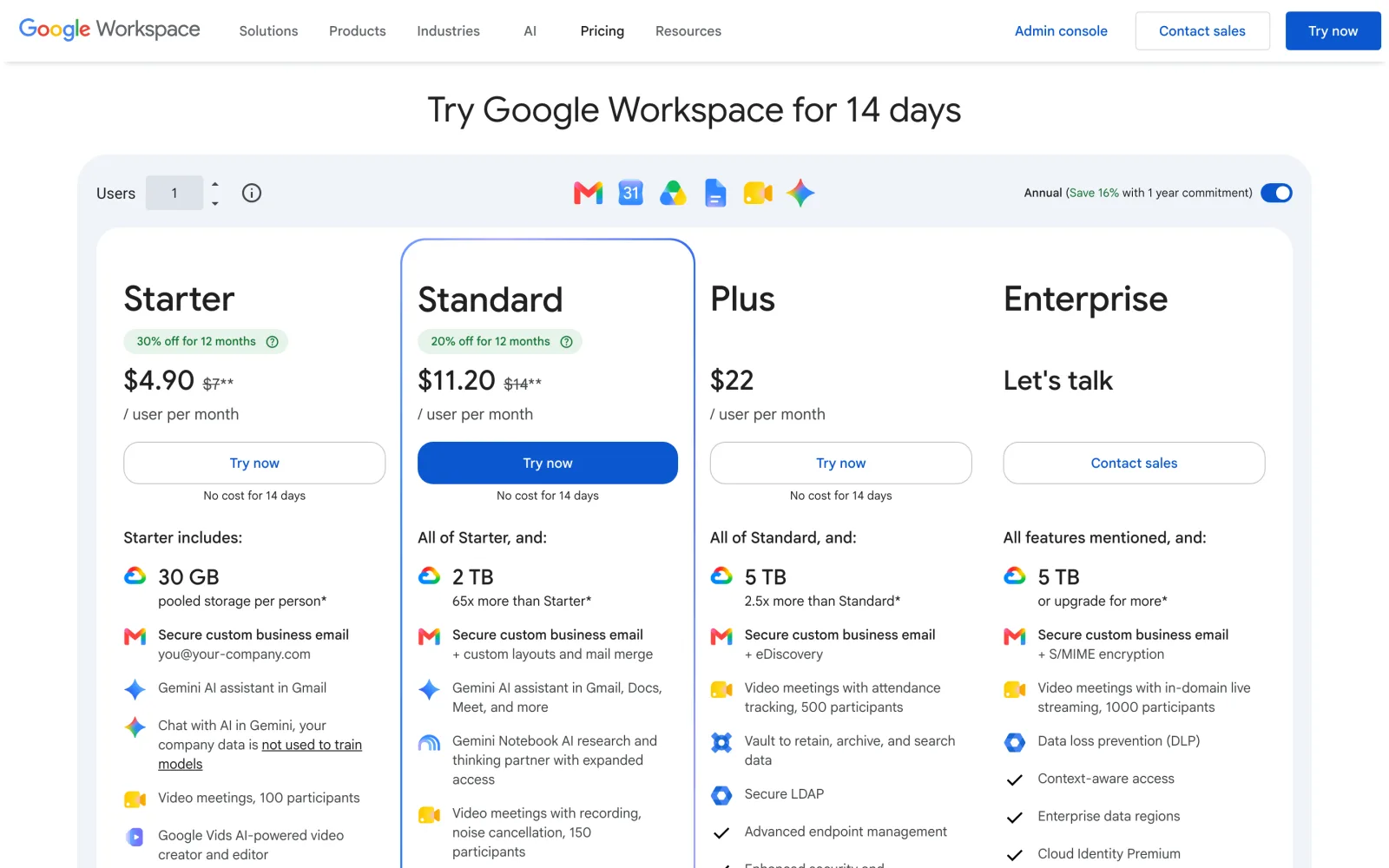
What it costs. With a yearly commitment, Business Starter is $7 per user a month, Standard $14 and Plus $22, for up to 300 users. When we checked, new sign-ups got 30% off Starter and 20% off Standard for the first 12 months. Five people on Standard pay $70 a month at list price. Source: the Workspace pricing page.
What the team shares. Gmail, Docs, Drive and Meet, with Gemini inside them. Starter includes chat with Gemini and Gemini in Gmail; Standard adds Gemini in Docs, Meet and more, and expanded Gemini Notebook. Google says company data in Gemini isn't used to train its models.
Spending controls. None to set: each user is a seat with its own limits. Image and video generation sit in a separate AI add-on.
Where it falls short. Only Google's models. It's the right pick when the team already lives in Gmail and Docs; it doesn't replace ChatGPT or Claude for people who want those models.
Option 5: a multi-model app with team billing
These apps resell access to models from OpenAI, Anthropic, Google and others, so one bill covers all of them. You get the models, not each company's own app: features that live inside ChatGPT or Claude, such as Claude Code or ChatGPT's connectors, stay with those plans. The apps differ most in one thing: whether each person gets a seat with its own allowance, or the whole team spends from one pool.
Endless
What it costs. Basic is $49 a month for the whole workspace, or $39 billed yearly, with 3,700 credits and up to 10 people. Pro is $99, or $79 billed yearly, with 8,000 credits and up to 50 people. There's no charge per seat. Hobby, $23 a month, is for one person. Source: the pricing page.
What the team shares. One credit balance for 21 chat models from 10 makers, including GPT, Claude, Gemini and Grok, plus 19 image and 21 video models, voice and transcription. Each model's price in credits is on the models page. Projects keep a brand's documents and rules for every chat and generation; our guide to tools that remember brand guidelines compares that part.
Spending controls. This is where Endless differs from the seat-based plans. Admins set a spending limit in credits for each person and for each team, per billing cycle. A personal limit replaces the team's, and the usage page shows spending per member, team and tool. How it works is in the teams and limits docs.
Where it falls short. 3,700 credits is a pool for everyone, not a per-person allowance. As a rough guide, if a message uses 2,000 tokens in and 500 out, Basic covers about 2,300 messages a month with Claude Opus 5.5 or about 4,600 with Claude Sonnet 5.5, for the whole workspace. For five people that is about 460 Opus messages each. Video uses credits faster than chat. A team that chats all day on top models will need Pro or extra credits, and ChatGPT Business or Claude Team will be more predictable for it. On a paid plan, when the credits run out the chat keeps working on low-cost models, with a usage limit that resets every few hours; images and video wait for new credits. Plan credits don't roll over, and single sign-on is only on the Business contract.
Poe
What it costs. Poe says it starts at $4.99 a month. Its plans page lists yearly prices from $49.99 for 10,000 points a day to $2,499.99 for 8.25 million points a month; the 660,000-point plan is $199.99 a year. One subscription is shared, so the team pays once. Source: Poe's plans page.
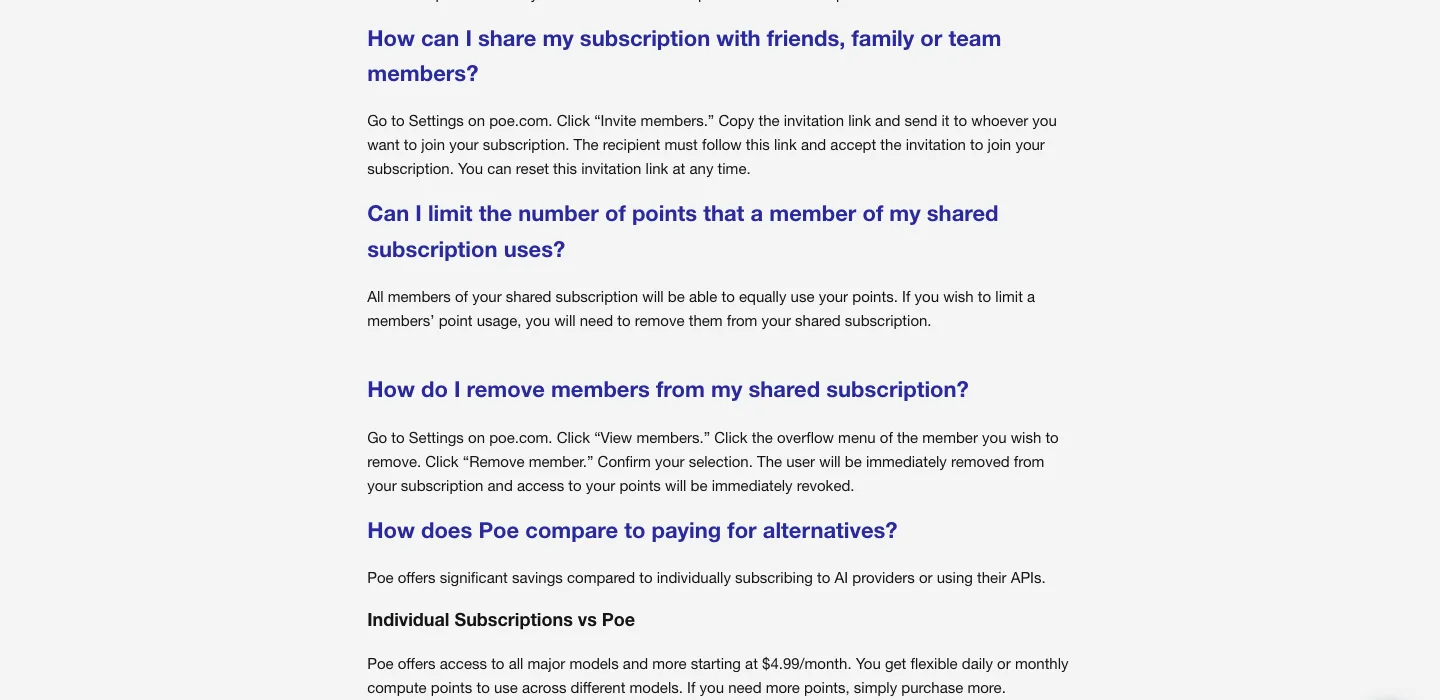
What the team shares. The subscriber invites members with a link from Settings, and all of them spend the same points on GPT, Claude, Gemini and many other bots.
Spending controls. None per person. Poe's purchases FAQ says: "All members of your shared subscription will be able to equally use your points. If you wish to limit a members' point usage, you will need to remove them from your shared subscription."
Where it falls short. One heavy user can spend the whole month's points. Endless vs Poe, fact by fact
Magai
What it costs. Standard is $20 a month and each extra seat is $20, so five people pay $100. Pro ($40) and Ultra ($200) seats are quoted for the team, and teams above ten seats go to sales. Each plan includes a monthly usage amount equal to its price. Sources: the pricing page and the teams page.
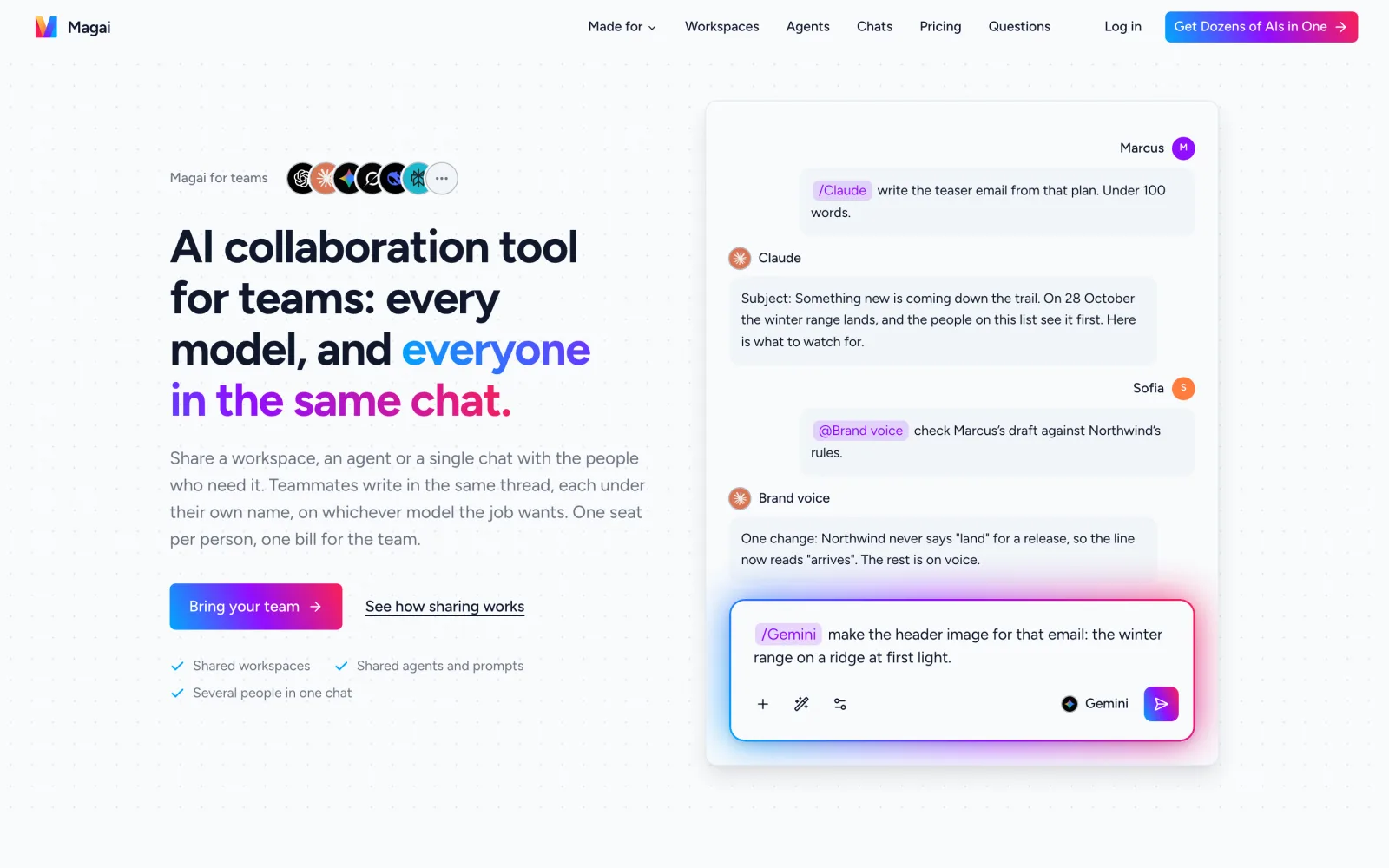
What the team shares. Workspaces with their own chats, agents, saved prompts and files, and chats several people write in. Every seat gets every model, on one invoice.
Spending controls. When you invite someone you can set a usage limit for them. The page doesn't say more about how it works.
Where it falls short. It's still priced per seat, so the team's cost grows with headcount. Endless vs Magai, fact by fact
Mammouth
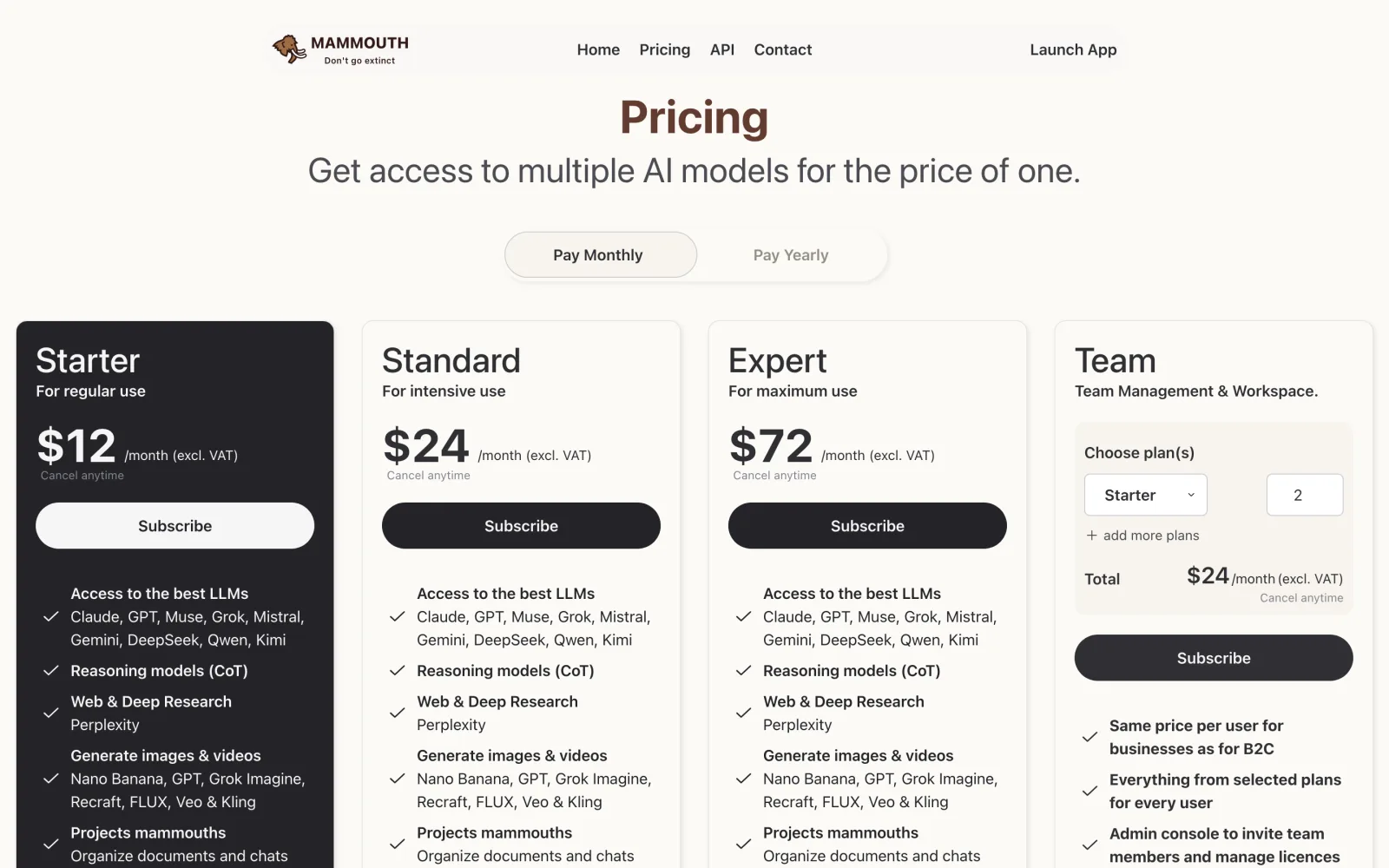
What it costs. Starter is $12 a month before VAT, Standard $24 and Expert $72. A team pays the same per person, and you can pick a different plan for each person, so five people on Starter pay $60. Source: the pricing page.
What the team shares. An admin console to invite members and manage licences, central billing and shared projects. Every plan includes Claude, GPT, Gemini, Grok and others, and image and video models such as Nano Banana, FLUX, Veo and Kling.
Spending controls. The plan level per person. The page doesn't mention spending limits.
Where it falls short. Usage is shown as a level, not a number of messages, and cost grows with each person.
Krater
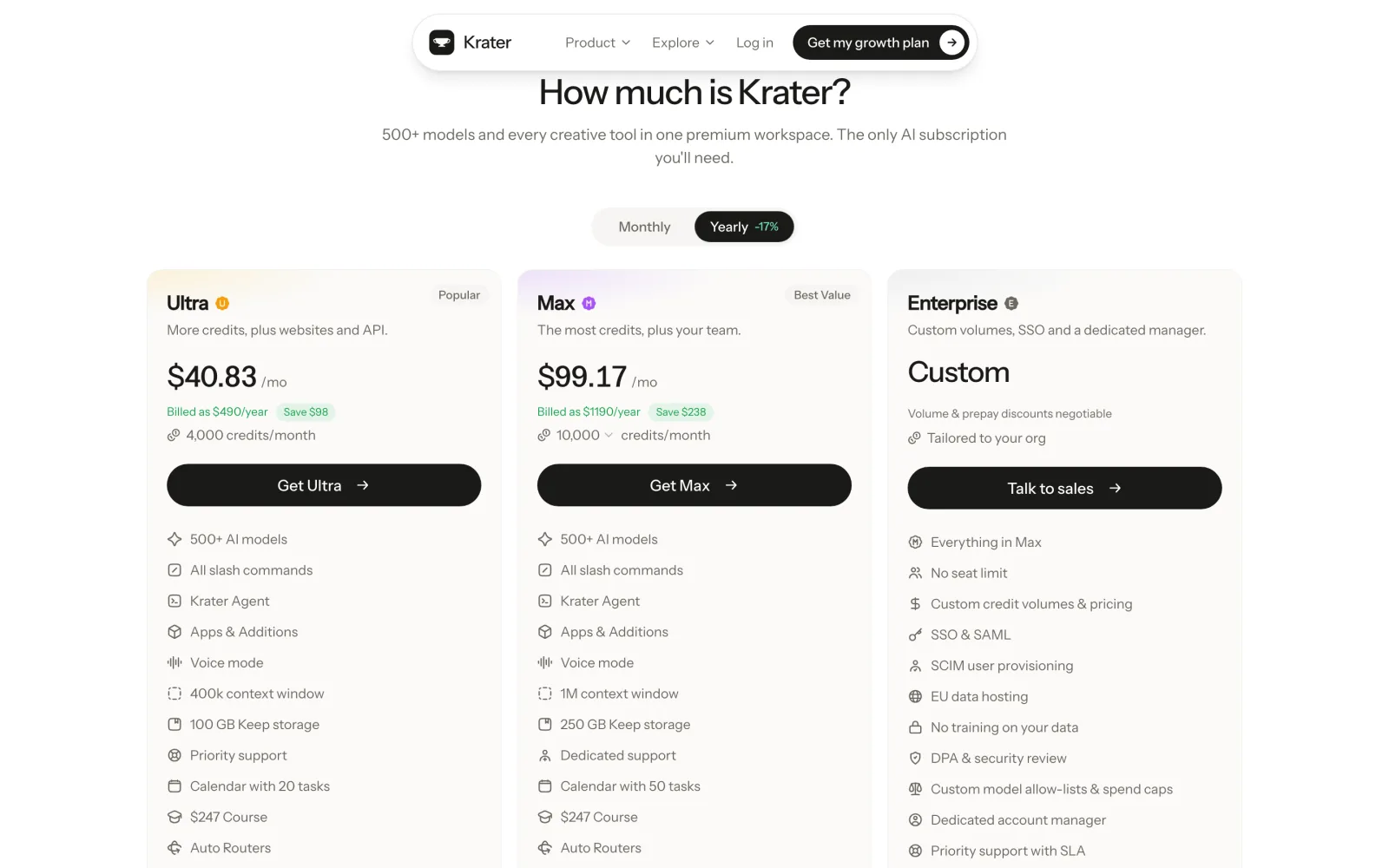
What it costs. Max is $119 a month, or $1,190 a year, for 10,000 credits a month, with larger credit tiers up to 100,000. Source: the pricing page.
What the team shares. Krater's FAQ says Max has no seat limit and its credit pool is "capped, not per person." It lists more than 500 models.
Spending controls. The page lists spend caps on Enterprise and doesn't mention limits per person on Max.
Where it falls short. Krater presents Max as its plan for a team, so sharing starts at $119 a month.
Others
ChatLLM Teams from Abacus.AI costs $10 per user a month, with no limit on how many users you invite; its FAQ doesn't state credits per user or spending controls. Zemith lists Plus at $14.99 per seat a month billed yearly, with 1.5 million credits per seat, on its pricing page.
Which one to pick
- Everyone uses one company's models and the team needs SSO and business terms: ChatGPT Business or Claude Team.
- The team already works in Gmail and Docs: Google Workspace with Gemini.
- A household that's fine with Gemini: Google AI Pro with family sharing.
- The cheapest shared bill, when you don't need limits per person: Poe.
- Seats with every model and a usage limit per invite: Magai.
- A different plan level for each person: Mammouth.
- One pool of credits for chat, images and video, with a spending limit per person and per team: Endless.
FAQ
Is there one subscription that gives my team ChatGPT, Claude and Gemini plus image and video generation, with one shared bill?
Yes, from multi-model apps. Endless, Magai, Mammouth and Krater include GPT, Claude and Gemini models plus image and video models on one bill, and Poe shares one subscription's points with the whole team. OpenAI, Anthropic and Google sell only their own models, so their business plans each cover one company.
What are the best alternatives to paying separately for ChatGPT Plus and Claude Pro, for a team of 5?
Five Plus plans plus five Pro plans cost $200 a month. ChatGPT Business and Claude Team together cost $250. A multi-model app costs less: Endless Basic is $49 for the workspace, Mammouth Starter $60 before VAT, Magai $100 and Krater Max $119. Check how much usage each one includes for your team before you compare the prices.
Which AI app lets me set a spending limit per team member while using many models from one credit pool?
Endless: on Basic and Pro, everyone spends from one credit pool and admins set limits per member and per team. Magai lets you set a usage limit when you invite someone, on a per-seat plan. Poe shares one points balance with no limit per member, and Krater's Max page doesn't mention per-person limits.
Can two people share one ChatGPT Plus or Claude Pro account?
No. OpenAI's Terms of Use and Anthropic's Consumer Terms both forbid sharing login details or making your account available to anyone else, and both companies can suspend an account that does.
What do we lose with a multi-model app instead of ChatGPT Business or Claude Team?
The features that live inside each company's app, such as Claude Code or ChatGPT's connectors and workspace agents, and the business terms that come with those plans, such as SSO on every seat. You gain the other companies' models and, in some apps, image and video generation on the same bill.
How did you check these facts?
From each company's own terms, help center and pricing pages, on 26 November 2026. Plans change often, so check each pricing page before you decide.
Bring this to your team
Start creating with Endless: chat, image, video, transcripts, and social insight in one workspace.
Keep reading
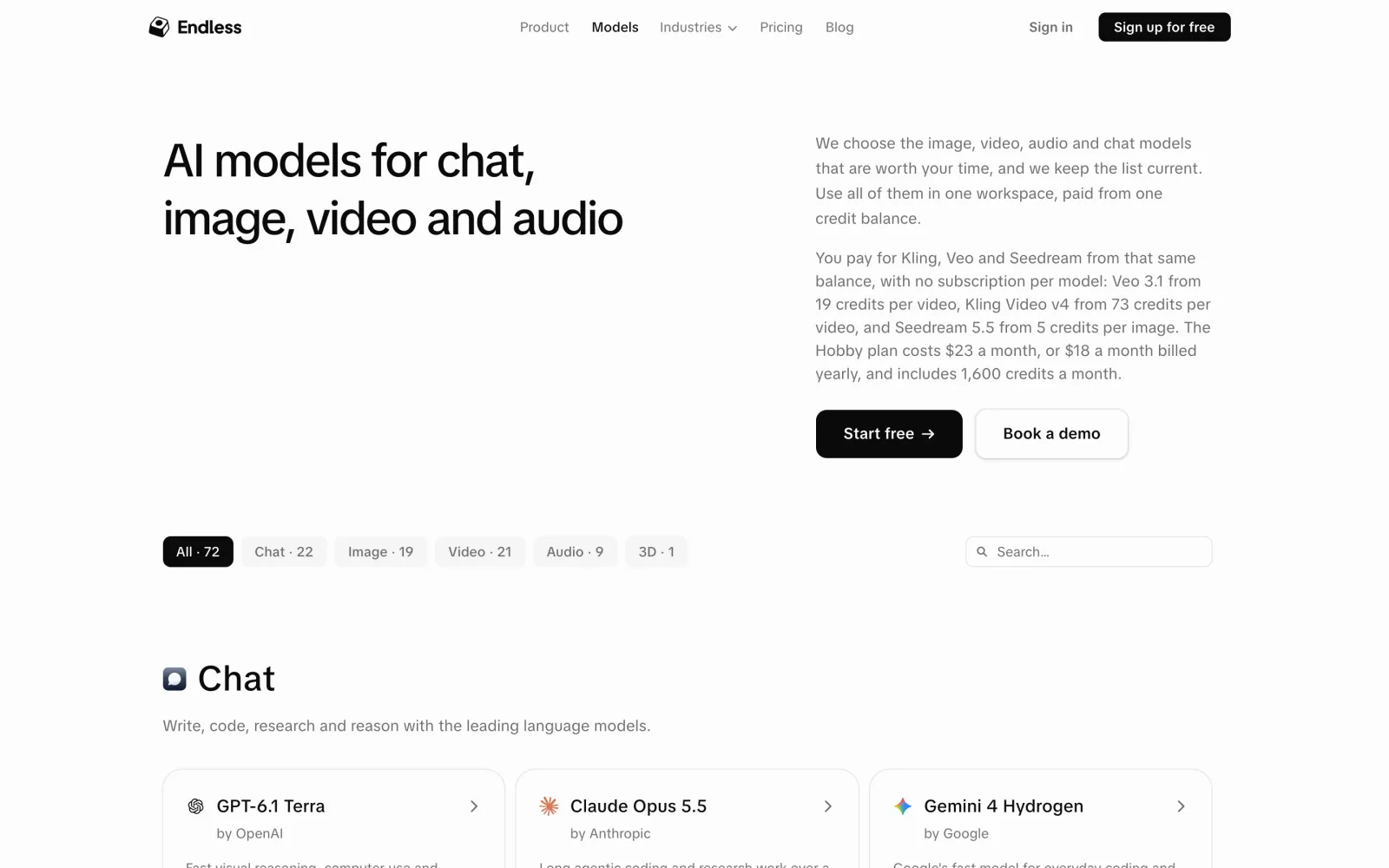
The best apps to use ChatGPT, Claude, Gemini and Grok with one subscription (2026)
Poe, T3 Chat, ChatLLM, Mammouth, Writingmate, Magai, TypingMind, OpenRouter and Endless compared: which models each one includes, how limits work, how a team pays, and whether it also makes images and video.
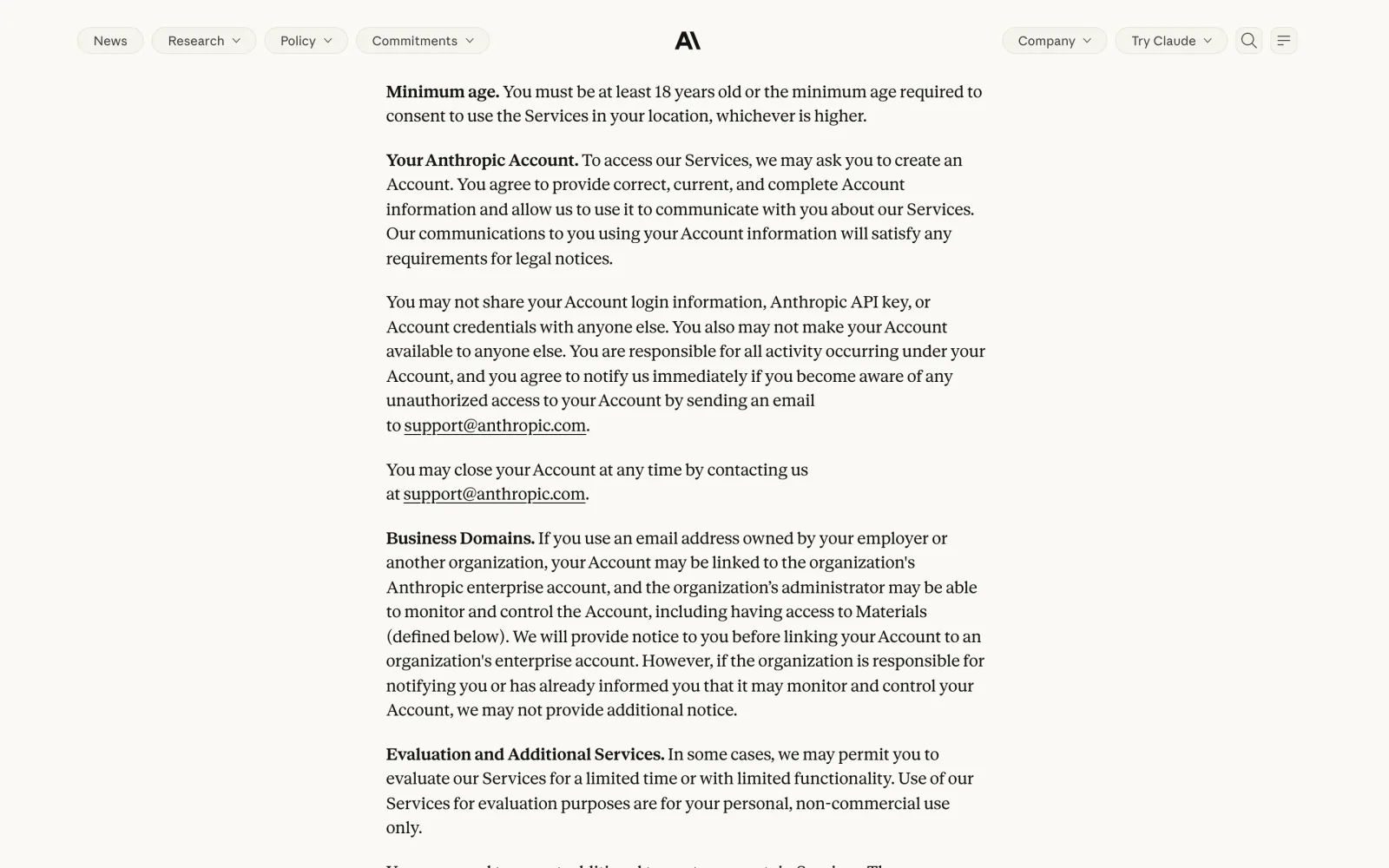
The risks of sharing one ChatGPT or Claude account at work, and what to do instead (2026)
What can go wrong when several people use one ChatGPT Plus or Claude Pro login: the terms, mixed chat history and memory, training settings, one usage limit, security alerts and offboarding. Then what a team can use instead.
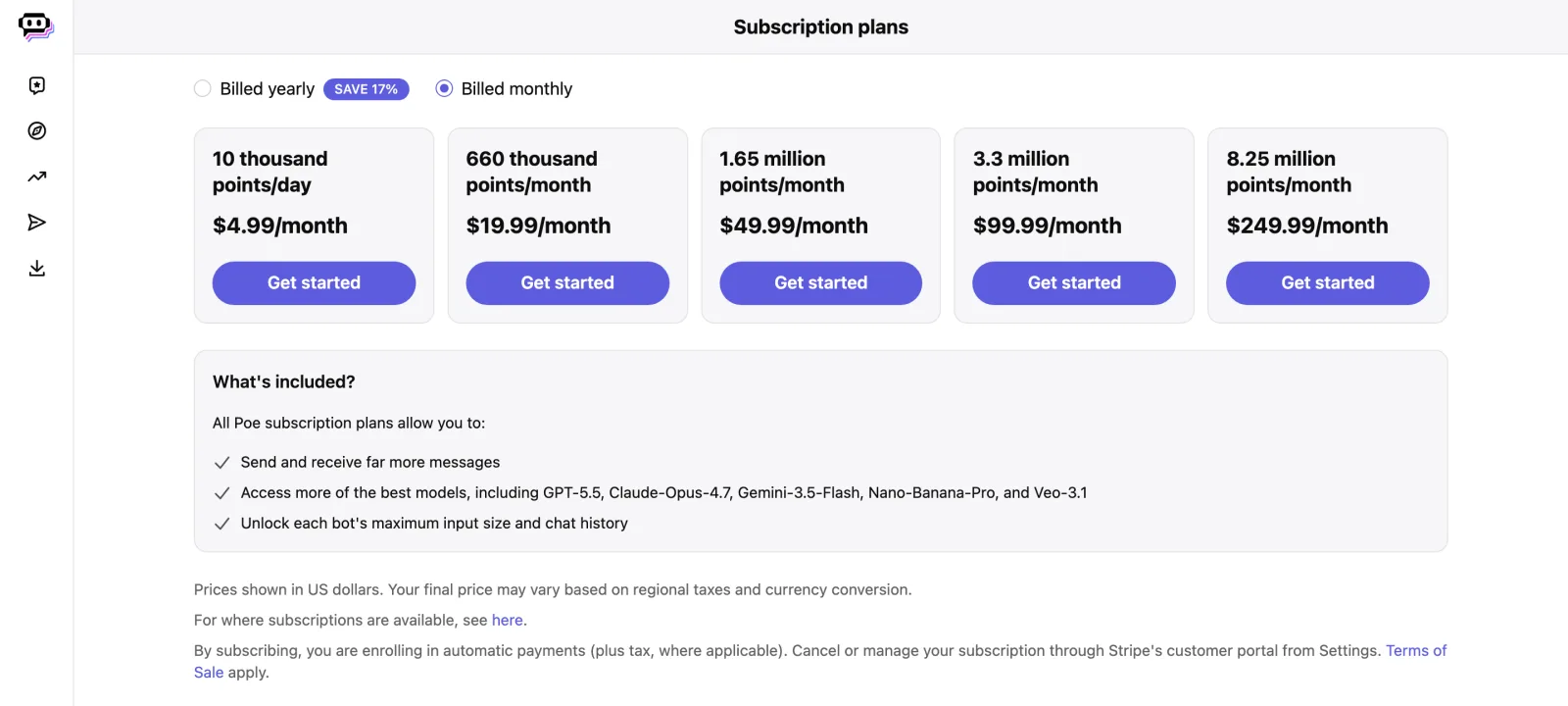
Poe pricing in 2026: every plan, what the points buy and how teams share it
What each Poe plan costs in November 2026, how many Claude, GPT and Gemini messages, images and Veo videos its points buy, why other pricing pages disagree, and how a team shares one subscription.